
Children · 4 min read
Flat feet and in-toeing: the shapes most children grow out of
Flat-looking feet and toes that point inward are extremely common in young children. When it's part of normal development, and when it's worth a check.
Download PDF ↓ of this guideFree to print and share with family, school or nursery.
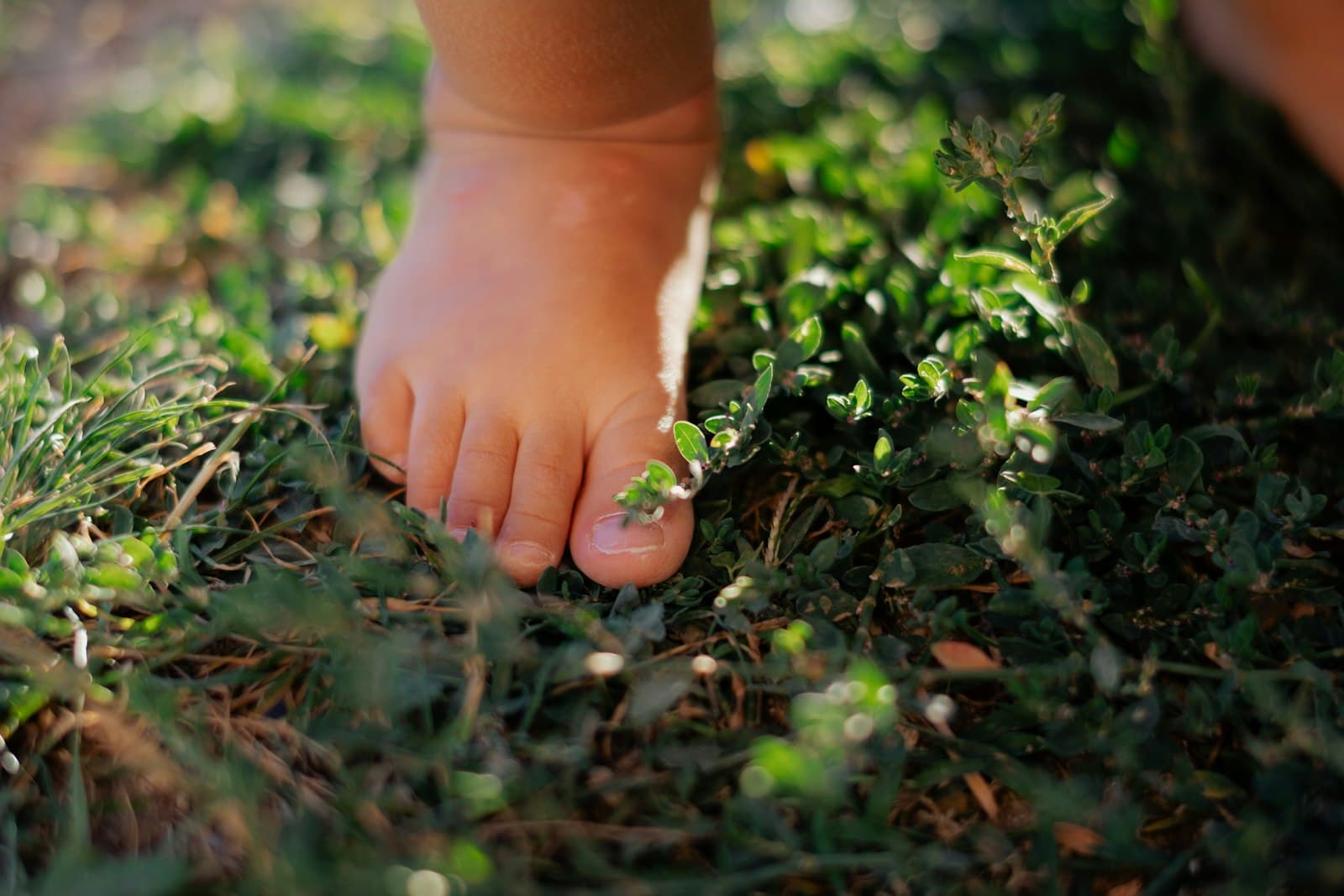
Flat feet: usually just how young feet look
Almost all babies and toddlers have flat-looking feet: the arch is masked by a pad of baby fat, and the ligaments that will eventually help hold an arch shape are still maturing. A visible arch typically appears gradually through early-to-mid childhood as that fat pad reduces and the foot's muscles and ligaments develop, and a good number of children never develop a very pronounced arch at all, and manage perfectly well throughout life.
A simple home check: look at your child's foot both standing (weight-bearing) and up in the air (relaxed). If an arch appears once weight comes off the foot, that's a flexible flat foot, by far the most common pattern, and it's rarely something to worry about on its own.
In-toeing: pointing feet inward
In-toeing (feet or knees pointing inward when walking or running, sometimes called being 'pigeon-toed') is also very common in young children and usually comes from the normal, gradual rotation of the leg bones (the thigh bone or shin bone) as a child grows, sometimes with a genetic tendency running in the family. It typically shows up as a toddler starts walking and gradually straightens through childhood as the bones rotate into their adult alignment, often by around age eight, though the exact age varies.
In-toeing doesn't usually cause pain, and contrary to old advice, there is no good evidence that shoe inserts, special shoes, or bracing speed up how quickly it resolves in typically developing children. Most children with in-toeing keep up with their friends running and playing without any trouble.
What helps
For most children, the honest answer is time, plus barefoot or minimal, flexible footwear that lets the foot's own muscles do their job rather than a rigid shoe doing it for them. Where a flat foot or in-toeing is causing genuine bother, aching after activity, tripping more than peers, or footwear wearing unevenly, physiotherapy can look at the whole picture: foot and leg strength, movement patterns, and footwear, and build a plan around what's actually bothering your child rather than the appearance alone.
When to seek help
Book an assessment, or see your GP, if a flat foot is rigid rather than flexible (no arch appears even off weight), if there's pain, if in-toeing or flat feet are on one side only, if walking looks effortful or your child trips frequently, or if things seem to be getting worse rather than better with age. It's also always reasonable to come in simply for reassurance: we're glad to tell you clearly when a shape is a normal part of growing up.
This guide is general information written by a paediatric physiotherapist, not medical advice about your child. If you are worried, trust your instinct: speak to your GP or health visitor, or get in touch with us.
Written by Lucy Jolliffe BSc MSc, HCPC registered physiotherapist (PH142090).